
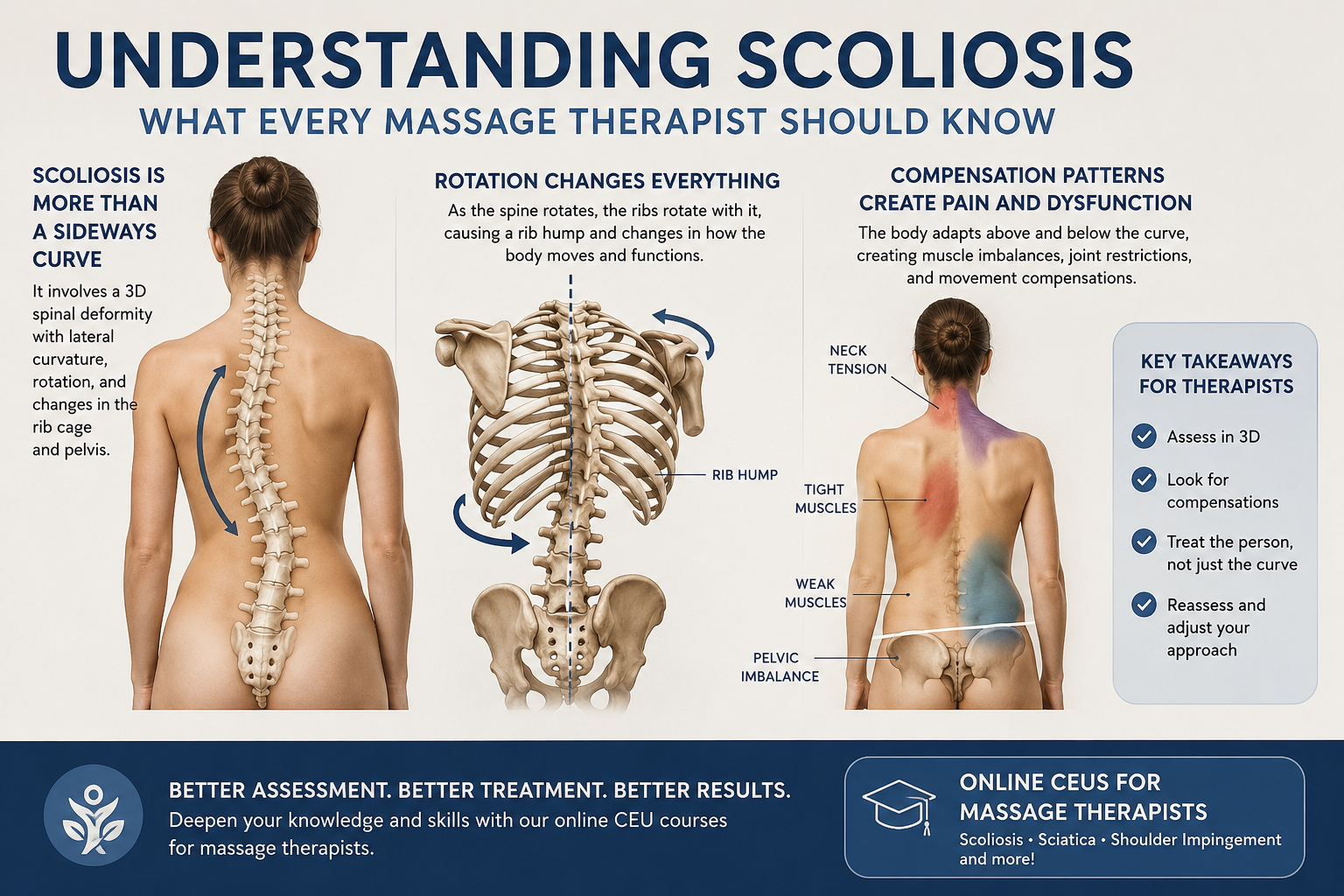

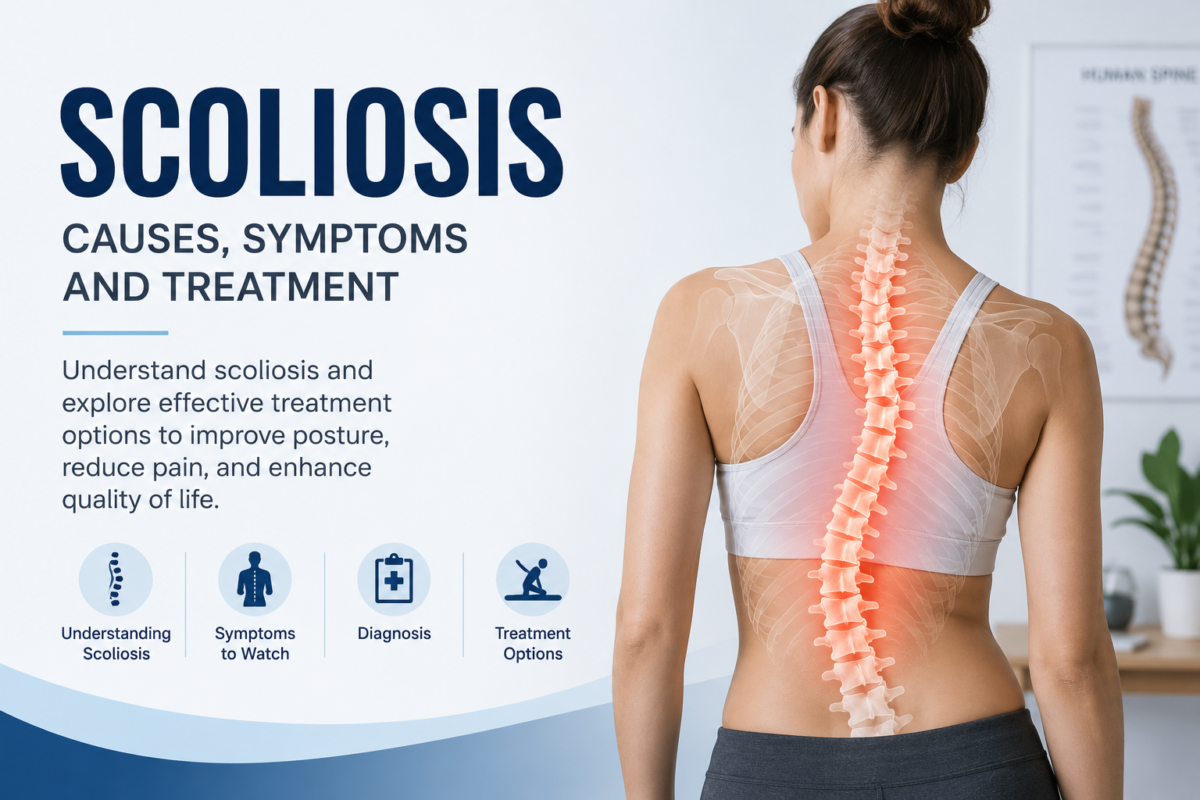
Scoliosis clients can be challenging because the issue is rarely just “tight muscles” or a simple side bend of the spine. Scoliosis involves curve, rotation, rib mechanics, compensation patterns, and asymmetrical loading through the body. For massage therapists, this means treating only where the client feels pain may not create lasting change. To work more effectively, therapists need to understand how the body is adapting, protecting, and compensating.
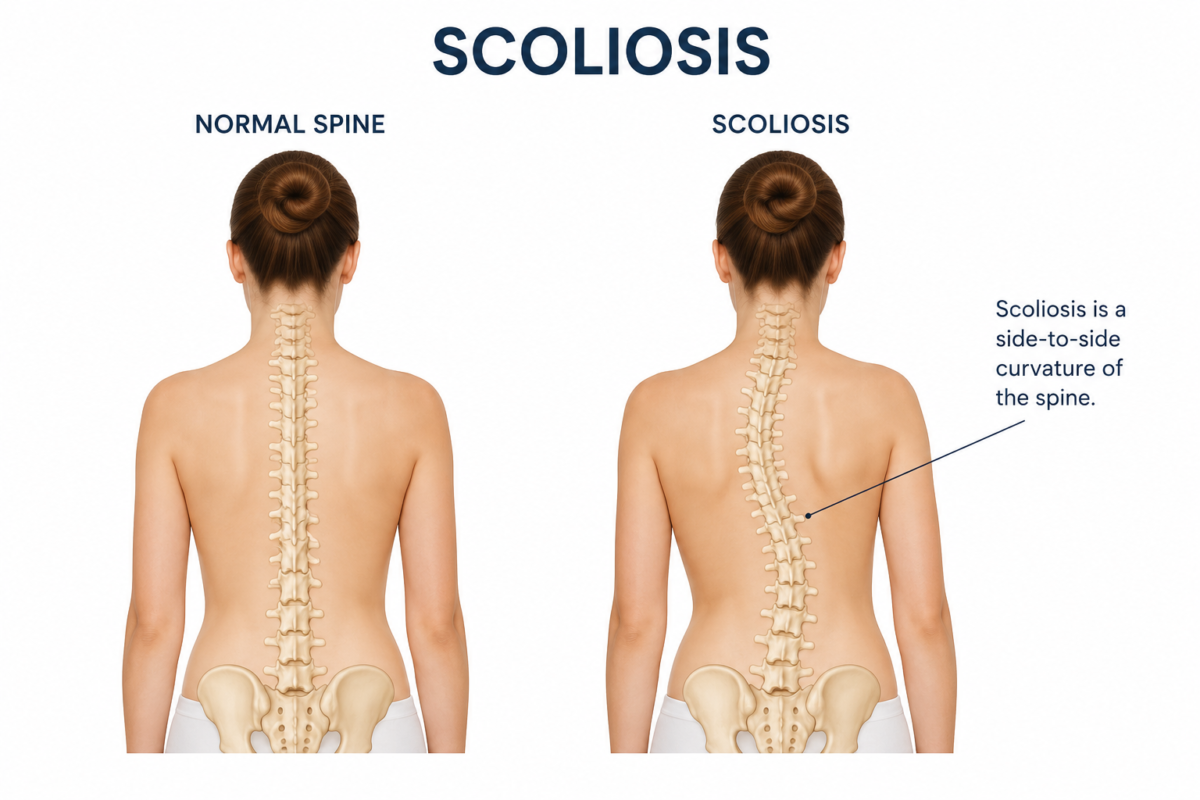
Scoliosis Is Not Just a Sideways Curve
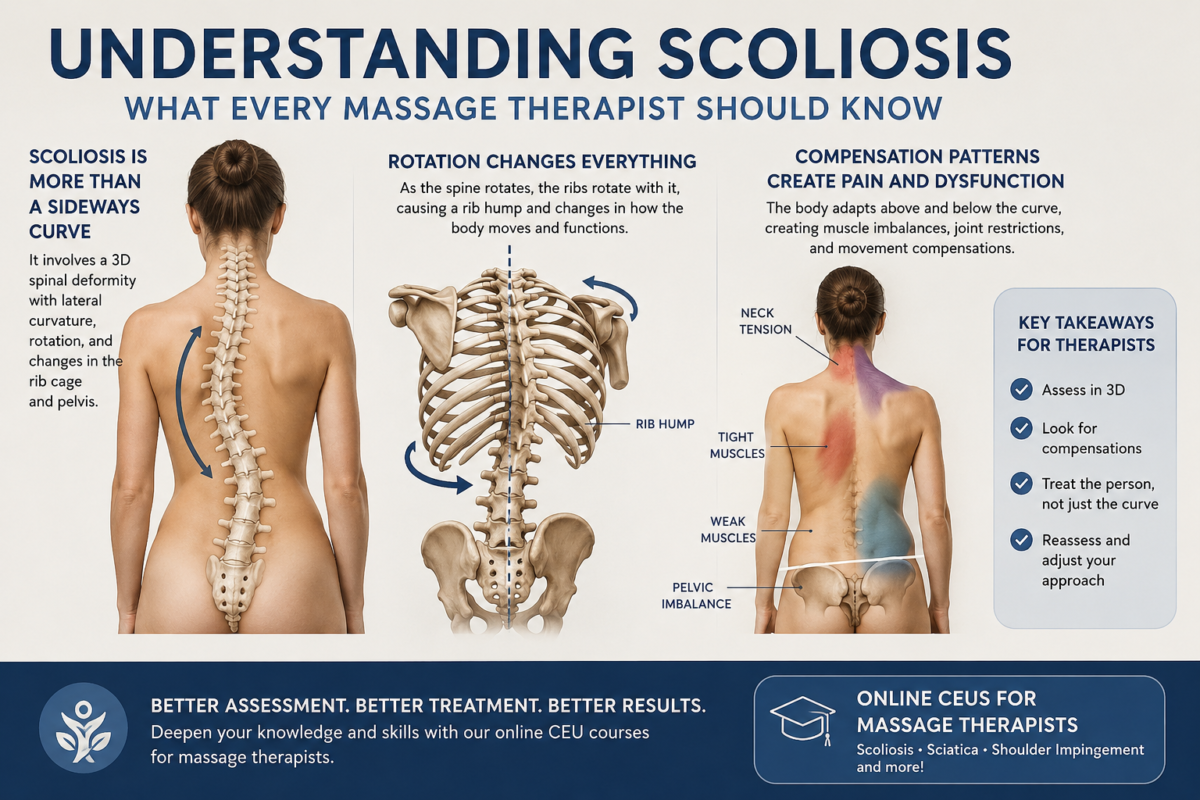
Most people think scoliosis is simply a side bend in the spine, but scoliosis is actually a complex 3D condition. Along with lateral curvature, the spine also rotates, which changes rib positioning, muscle balance, posture, and movement patterns throughout the body. For massage therapists, understanding this is important because treating only what appears “tight” on the surface may miss the deeper compensation patterns driving the problem.
Rotation Changes Everything
Spinal rotation is one of the biggest reasons scoliosis clients can be difficult to assess and treat. As the vertebrae rotate, the ribs rotate with them, often creating the visible “rib hump” commonly seen in thoracic scoliosis. This rotational component changes how the body distributes force, breathes, stabilizes, and moves. If therapists only focus on side bending without considering rotation, treatment outcomes may be limited.
The “Tight Side” Is Not Always the Problem
Many therapists automatically try to aggressively stretch or release the side that feels tighter. However, in scoliosis, the convex side may feel dense or tight because it is overloaded and working harder to stabilize the body. The concave side may actually be compressed, restricted, and lacking movement variability. Understanding the difference between overworked tissue and truly shortened tissue can change how therapists approach treatment pressure and technique selection.
Pain Often Shows Up Where the Body Is Overworking
Scoliosis pain is not always caused directly by the spinal curve itself. Often, pain develops in the areas compensating the most. The neck, shoulders, lower back, hips, and rib cage may become overloaded as the body works to keep the head balanced over the pelvis. These compensation strategies can create chronic tension, guarding, joint irritation, and fatigue that therapists commonly encounter in practice.
Assessment Matters More Than Routine
No two scoliosis clients move exactly the same. This is why assessment-driven treatment is often more effective than relying on the same routine for every client. Observing posture, rib positioning, pelvic shifts, breathing mechanics, gait patterns, and weight distribution can help therapists better understand what the body is protecting and compensating for. Reassessing throughout the session also helps guide treatment decisions instead of guessing.
How Massage Therapists Can Approach Scoliosis Better
Massage therapists often get better results when they focus on improving movement variability, reducing overload, and helping the nervous system feel safer rather than trying to “force” the body straight. Gentle mobility work, breathing integration, positional changes, movement-based techniques, and reducing excessive guarding can often be more effective than simply applying deeper pressure. Treatment should focus on understanding how the entire body is adapting, not just where symptoms appear.
Learn More in My Online Scoliosis CEU
If you are a massage therapist and want to better understand scoliosis, spinal mechanics, compensation patterns, and how to approach these clients with more confidence, I created an online Scoliosis CEU course for massage therapists.
View the course here:
https://restorationmassagecenter.thinkific.com/products/courses/understandingscoliosisYou can also view all CEU courses here:
https://restorationmassagecenter.com/rmcmassagetherapistonlineceus/
Your style is very unique compared to other folks I have read stuff from.
Many thanks for posting when you have the opportunity, Guess I’ll just bookmark this site.
Thank you so much for the kind words! I truly appreciate the support. I’m glad you’re enjoying the content and finding the style refreshing. Thanks for bookmarking the site, and I look forward to sharing more helpful posts in the future!